How to Choose a Smartwatch Display: AMOLED vs IPS, Cover Glass Brands and the Real Cost of Screen Quality
Introduction: Why This Question Matters to You
For smartwatch brands, wholesalers and distributors, screen quality is often the first feature a customer notices—and one of the most misunderstood items on a supplier quotation. Two watches can look almost identical online but differ in display panel technology, cover-glass quality, optical clarity, curvature and long-term durability.
The key question is not simply “Is it AMOLED?” It is “Which screen components are used, how were they tested, and what does the buyer receive for the price?” This guide separates display panels from protective glass, explains common sourcing trade-offs, and uses the Morrison M203 as a practical example.
Section 1: Key Concepts Every Buyer Should Understand
AMOLED, IPS/TFT LCD and MIP: Different Technologies, Different Priorities
AMOLED is a self-emissive display technology known for deep blacks, strong contrast and vivid watch faces. IPS is an LCD viewing-angle technology, while TFT describes the thin-film-transistor architecture used to drive many LCD panels. LCD-based options can be cost-effective, but their backlights and optical performance differ from AMOLED. MIP reflective displays favor daylight legibility and low-power use in outdoor-oriented products. Actual brightness, power draw and pricing vary by panel specification—not the technology label alone.
Display Panel Brands Are Not the Same as Cover-Glass Brands
A buyer may encounter names such as Samsung Display when discussing OLED panels, but Panda Glass, Corning Gorilla Glass and sapphire crystal refer to the protective material above the display. A smartwatch may combine an AMOLED panel with Panda cover glass; comparing “AMOLED vs Panda” therefore compares two different layers. Ask the factory to identify the panel supplier and cover material separately, with model-level evidence where available.
What Does 7H Hardness Actually Mean?
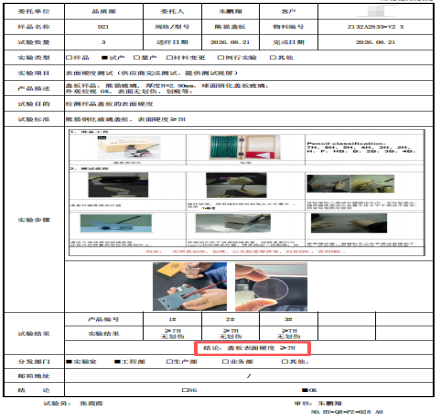
A 7H claim normally refers to a pencil-hardness test performed under defined conditions. It does not mean 7 on the Mohs mineral-hardness scale, and it does not guarantee that glass is scratchproof or unbreakable. For meaningful comparisons, request the test method, load, sample count, pass criteria, scratch results and any drop or impact tests. Curved geometry and coatings can also influence the finished cover’s cost and appearance.
Trust rule: Do not compare cover-glass hardness, panel color or brightness using a single marketing number. Request samples and test reports under the same conditions.
Section 3: From Sampling to Bulk Order — How It Usually Works
1. Sampling
Request at least two screen configurations or benchmark samples. Compare black levels, text sharpness, touch response, curved-edge appearance and actual outdoor readability. Examine the cover after controlled everyday-wear simulations.
2. Customization & OEM/ODM
Confirm the approved display panel, glass supplier, curvature, coatings, watch-face artwork, packaging language and branding specifications. Record component part numbers or controlled alternatives in the purchase agreement.
3. Bulk Production
Agree on MOQ, approved samples, delivery schedule and how substitution requests will be handled. Display and glass changes can affect price, tooling, assembly yield and lead time.
4. Quality Control & Delivery
Verify incoming panel inspection, touch-function testing, brightness/color acceptance, glass cosmetic checks and pre-shipment sampling. Retain clear records for any claims about hardness or scratch resistance.
Section 4: Introducing the Morrison M203 Ultra-Slim AMOLED Smartwatch
The M203 demonstrates how screen selection can support a premium-looking, price-conscious wearable without relying on vague marketing claims:
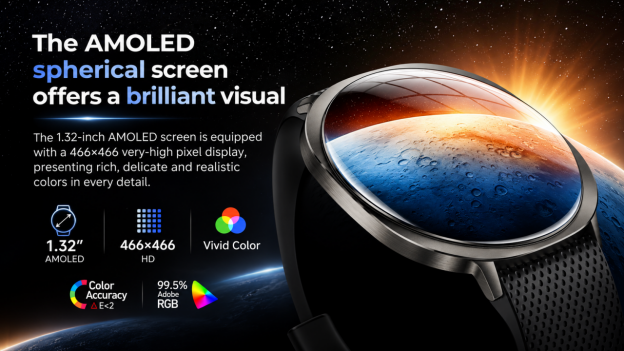
Display Clarity: A 1.32-inch AMOLED screen with 466 × 466 resolution is designed for sharp, vivid watch-face presentation.
Panda Glass Protection: Morrison specifies Panda-brand cover glass with 7H pencil-hardness performance. Its FABE material cites a test report in which multiple samples passed the stated ≥7H criterion without visible scratches under the test conditions.
Curved Premium Finish: Double-spherical curved touch glass creates rounded transitions and a more refined visual feel, complementing the M203’s 5.93mm ultra-slim body and brushed zinc-alloy middle frame.
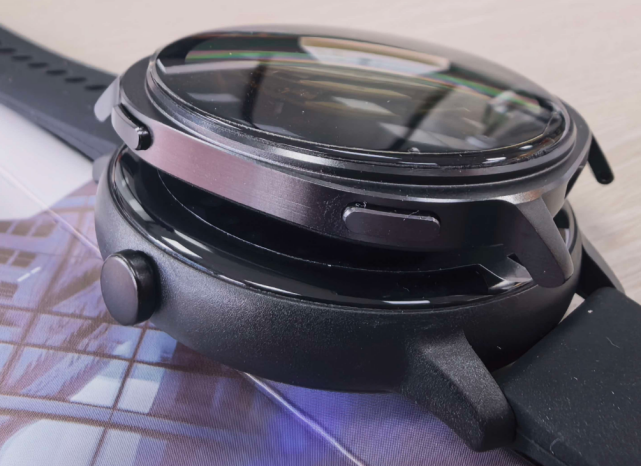
Buyer takeaway: The M203 combines an AMOLED panel and Panda protective glass—two different components contributing to appearance, resistance to daily wear and overall sourcing cost. Pricing comparisons should still be based on complete module specifications and verified test conditions.
FAQ (Buyer's Quick Reference)
Q: Is AMOLED automatically better than IPS LCD for every smartwatch?
No. AMOLED commonly offers high contrast and deep blacks, while IPS LCD configurations can serve cost-sensitive applications. Outdoor readability, power consumption and final price depend on the exact modules and usage conditions.
Q: Is Panda Glass the manufacturer of the M203 AMOLED display?
No. Panda is identified as the M203 cover-glass brand in Morrison’s documentation; AMOLED describes its display technology.
Q: Does 7H mean the M203 screen cannot be scratched?
No. The M203 FABE material reports a 7H pencil-hardness result for its Panda cover glass. No glass should be marketed as completely scratchproof; ask for the full test method and test report before making comparative claims.
Q: Why do two 1.32-inch AMOLED watches have different wholesale prices?
Differences may include panel grade, brightness, driver electronics, cover-glass brand, curvature, bonding process, coating, assembly yield, warranty terms and order volume—not screen size alone.
Let's Discuss Your Project
To compare smartwatch screen options for your target market, please share:
• Target market & price: your preferred retail segment and target wholesale price
• Order quantity: sample needs and estimated order volume
• Display preference: AMOLED, LCD or other technology; brightness and screen size
• Glass & durability: desired cover material, curvature and required test evidence
Morrison can discuss available display configurations, M203 samples, technical specifications and supporting test documentation for your evaluation.
Website: www.szmorrison.com
Email: sales01@szmorrison.com
WhatsApp: +86 147 7480 4030
WeChat: 14774804030
Shenzhen Morrison Technology Co., Ltd — Smart Wearable, Better Health.

Quick Links
Contact us
Categories